
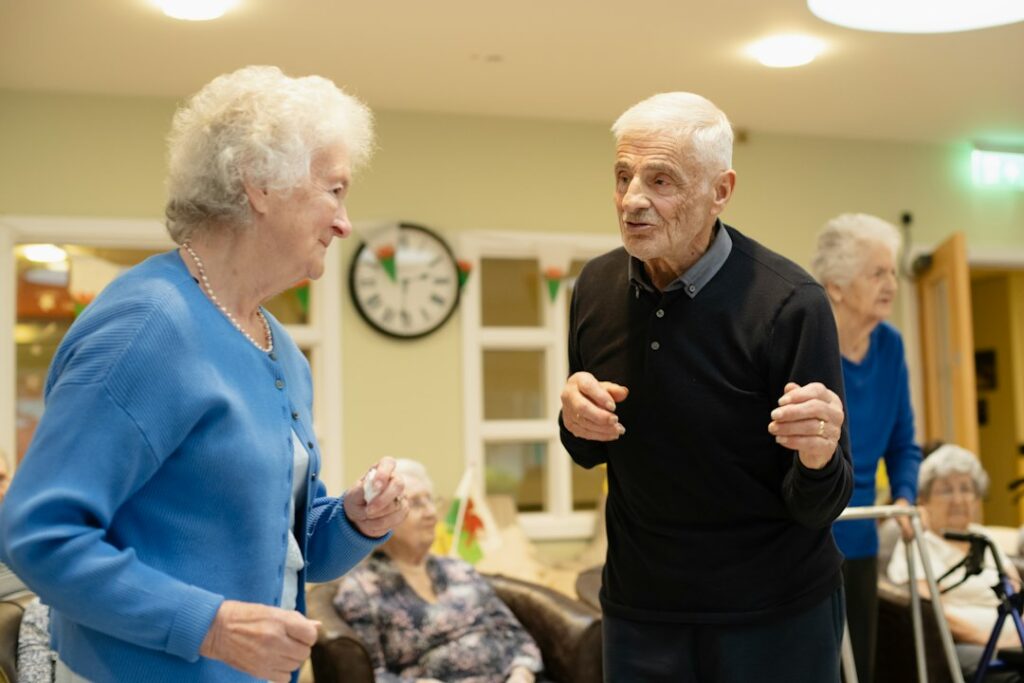
Visiting a friend or family member in assisted living should feel comfortable, respectful, and centered on the resident’s needs. Good visiting etiquette is less about following a rigid set of rules and more about protecting privacy, health, dignity, and peace for everyone in the residence.
What should visitors know before arriving?
Before visiting, check the residence’s current visitor procedures and ask the resident what time works best. Policies may cover sign-in requirements, visiting hours, identification, the number of guests allowed, children, pets, food, outdoor areas, and infection-control precautions.
Pennsylvania assisted living residents generally have the right to receive visitors, provided visits do not adversely affect other residents. A residence may also establish reasonable policies related to access and visitation. Those policies can vary, so asking ahead prevents confusion at the entrance.
A short phone call or message can also help answer practical questions:
- Is the resident feeling well enough for a visit?
- Would a quiet visit in the apartment be better than time in a common area?
- Are there temporary precautions because of respiratory illness or another contagious condition?
- Does the resident need help arranging transportation or meeting the visitor at the entrance?
- Are there meal, medication, therapy, or activity times that should be avoided?
During colder months, allow extra travel time and consider sidewalk, parking, and entrance conditions. Wet shoes, bulky coats, and icy walkways can create hazards inside and outside the building.
Should someone visit if they are sick?
Visitors with fever, vomiting, diarrhea, a significant cough, sore throat, or other signs of contagious illness should delay a non-urgent visit. Older adults and people with chronic health conditions may become seriously ill from infections that cause only mild symptoms in younger adults.
If a visit cannot be postponed, contact the residence first and follow its instructions. The safest option may be a phone call, video conversation, window visit, or another arrangement until the visitor is no longer infectious.
Visitors should also follow temporary precautions during periods of increased respiratory illness. These may include wearing a mask, using hand sanitizer, limiting time in shared spaces, or visiting in the resident’s room rather than moving throughout the building. Do not assume that a familiar residence has the same rules every week; procedures can change during an outbreak or other health concern.
How long should a visit last?
There is no universal ideal length. A useful visit is one that matches the resident’s energy, attention, and comfort.
Some residents enjoy a long conversation. Others become tired after 20 or 30 minutes, particularly if they have memory loss, hearing difficulties, pain, or trouble processing multiple conversations. Watch for signs that the visit should end:
- The resident becomes quiet, restless, or frustrated.
- The resident repeatedly asks the same question.
- Conversation becomes difficult to follow.
- The resident appears sleepy, uncomfortable, or overwhelmed.
- Staff indicate that care, meals, or rest is needed.
Ending a visit before the resident becomes exhausted is considerate. A calm goodbye is often better than waiting until the person is visibly distressed.
What is respectful behavior inside the residence?
Visitors should speak with the resident first rather than immediately directing questions to staff. The resident remains the central person in the visit and should be included in conversations about preferences, activities, health concerns, and daily routines whenever possible.
Respect privacy by knocking before entering a private room or apartment, even if the door is partly open. Do not open drawers, closets, cabinets, mail, medication containers, or personal papers without permission.
Common areas require additional awareness. Avoid blocking hallways, elevators, dining spaces, or exits. Keep voices at a reasonable volume, and do not photograph or record other residents or staff. A picture that seems harmless may capture someone in the background without consent.
Visitors should also avoid discussing private family matters, finances, medical information, or conflicts where other residents can hear. Assisted living communities are shared homes, not public waiting rooms.
How should visitors interact with a resident who has memory loss?
Use a calm tone, simple questions, and familiar topics. Avoid testing memory with questions such as, “Do you remember who I am?” Instead, introduce yourself naturally and explain the connection if needed.
Helpful approaches include:

- Talk about music, family traditions, photographs, hobbies, pets, or familiar places.
- Offer one question or idea at a time.
- Allow extra time for the resident to respond.
- Do not argue over a mistaken detail unless safety depends on correcting it.
- Redirect gently when conversation becomes repetitive or upsetting.
- Follow the resident’s emotional cues rather than forcing an activity.
A resident may not remember the visit later, but can still experience comfort, companionship, and reassurance during it.
May visitors bring food, gifts, children, or pets?
Ask before bringing anything that could affect health, safety, diet, or shared space. Food may conflict with dietary restrictions, allergies, swallowing concerns, diabetes management, or medication schedules. Homemade food should be labeled with its contents and date when the residence permits it.
Practical gifts are often easier than clutter-producing items. Consider a card, family photographs, large-print reading material, music, or a seasonal decoration that fits the resident’s preferences and available space.
Children can be welcome visitors when they are healthy, supervised, and prepared for the setting. Explain beforehand that some residents may speak slowly, repeat themselves, or appear confused. Keep visits flexible and leave if a child becomes restless or the resident seems tired.
Pets may require advance permission, current vaccinations, leash control, and a plan for accidents or allergies. Never bring an animal into the building without checking the rules first.
What if the resident wants to leave the building?
A resident may want to go out for a meal, family gathering, appointment, walk, or seasonal event. Before leaving, confirm sign-out procedures, transportation arrangements, mobility needs, medication timing, weather concerns, and the expected return time.
Tarentum’s changing seasons can affect these plans. Summer heat, winter cold, rain, and slippery conditions may be more difficult for a person who uses a walker, wheelchair, or oxygen equipment. Bring suitable clothing and allow enough time to move safely rather than rushing.
Visitors should not change medication schedules, transfer techniques, diet instructions, or mobility plans without coordinating with the resident and appropriate staff. If the resident needs more help than expected, return to the residence and ask for guidance rather than improvising.
What should visitors do if they have a concern?
A visitor who notices a safety, privacy, care, or communication concern should first listen to the resident and document specific facts, including dates or examples when useful. Raise the concern through the residence’s established process without discussing it loudly in a common area.
The resident has rights related to privacy, communication, association, and complaints. A resident or designated representative may ask how concerns are handled and what steps are available if an issue is not resolved.
Respectful visiting supports the resident without taking control away from them. The most reliable habits are simple: arrive prepared, protect privacy, stay home when sick, adapt to the resident’s energy, and treat the assisted living residence as the resident’s home.
